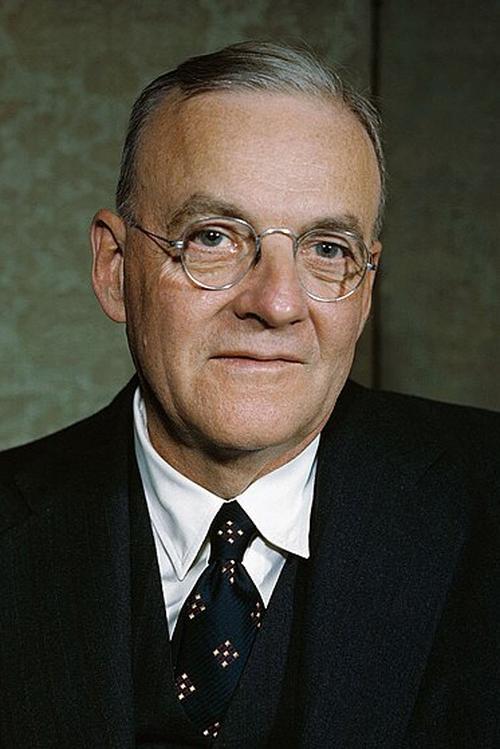
John Foster Dulles
John Foster Dulles (February 25, 1888 – May 24, 1959) was a prominent American politician, attorney, and diplomat, best known for his tenure as Secretary of State under President Dwight D. Eisenhower from 1953 until his resignation in 1959. A member of the Republican Party, Dulles briefly served as a U.S. senator from New York in 1949 before taking on a more significant role in shaping U.S. foreign policy during the early Cold War period.
Dulles was a key architect of the United States' strategy to combat the spread of communism, promoting a doctrine of containment that included a willingness to engage in military intervention when necessary. His commitment to a strong anti-communist stance was reflected in his support for various international alliances and pacts, such as the Southeast Asia Treaty Organization (SEATO) and the formation of NATO.
Among his notable contributions was the establishment of the "brinkmanship" policy, which aimed to deter aggression by demonstrating a readiness to confront enemies militarily. Dulles also played a crucial role in several significant events, including the 1954 Geneva Conference and the U.S. response to the Suez Crisis. His diplomatic efforts and strategies left a lasting impact on American foreign policy, cementing his legacy as a key player in the geopolitical landscape of the 20th century.